The Great Gold Comeback: Why the World Is Buying Precious Metals? What Investors Need to Know

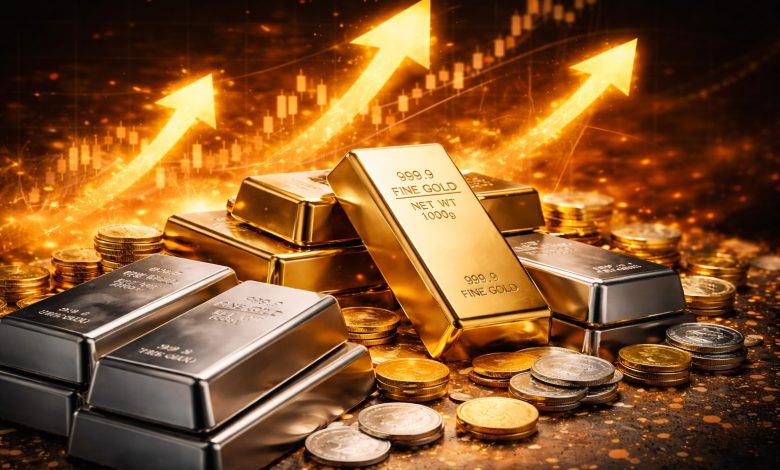
Global Currency Dominance Challenged as Gold and Silver Prices Skyrocket
growing reliance on modern communication devices and digital infrastructure has elevated silver into a backbone of Global economy
Gold and silver are rapidly becoming the preferred assets for investors worldwide, with prices expected to reach unprecedented levels by the end of this year and beyond. Alongside their traditional role as stores of value, silver has increasingly become a backbone of the modern economy due to its extensive use in advanced technologies.
In recent months, precious metals have taken center stage in global investment strategies. According to reports by major financial institution Finance Magnets, including Goldman Sachs, JPMorgan, and Bank of America, gold is projected to reach a historic high of between $4,900 and $5,300 per ounce by the end of 2026.
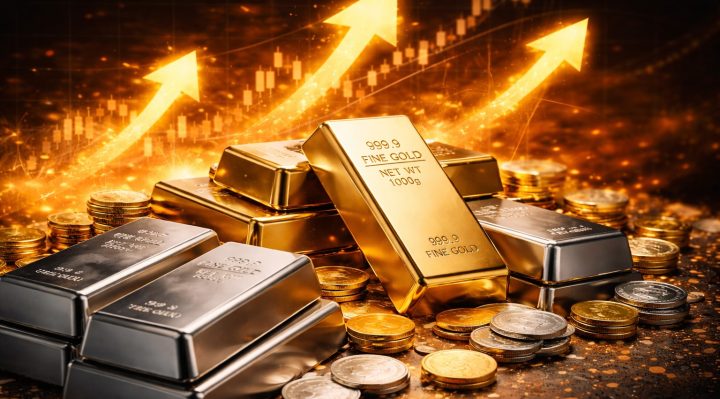
Prominent investors have also issued bold forecasts for silver: Peter Schiff predicts prices could reach $100 per ounce, Robert Kiyosaki estimates $200, while Robert Meloni foresees silver climbing as high as $375 per ounce. At the beginning of January 2026, silver began an extraordinary rally, touching a new all-time high of $95.34 per ounce. This surge reflects a growing shift among investors away from conventional fiat currencies and toward tangible assets.
Analysts attribute this sharp rise largely to escalating geopolitical tensions. President Trump’s announcement of tariffs on European countries—reportedly linked to efforts surrounding Greenland for rare earth minerals—has unsettled global markets. Proposed tariff of 10 percent from February, rising to 25 percent by June, have intensified market uncertainty.
As a result, investors are increasingly seeking safe-haven assets. According to macroeconomic experts, such geopolitical shocks are contributing to heightened market volatility, placing severe pressure on financial systems and paper currencies. Consequently, traders and investors are returning to the centuries-old gold and silver system as a hedge against instability.
Silver’s price surge is also being driven by its critical role in modern technology. The rapid expansion of artificial intelligence, the construction of large-scale data centers, increased deployment of solar panels, and growing demand from the defense industry have made silver an indispensable industrial metal. With supply failing to keep pace with soaring demand, the market is facing an acute shortage, further fueling price increases.
Given these trends, strategists such as Tom Bradshaw predict that by 2028, gold could rise to $9,000 per ounce, while silver could reach $375. These metals are no longer confined to jewellery; they are now integral to modern economies and defense systems worldwide. However, some experts caution that after such extraordinary gains, a price correction of up to 20 percent cannot be ruled out.
Despite this, financial analyst Peter Schiff argues that waiting for prices to fall may prove costly, as gold and silver appear poised to break all previous records. Analysts are therefore advising investors to benefit from this historic bull market through gradual investments, rather than committing large sums at once and exposing themselves to short-term volatility.
From South Asia to the Middle East—where gold remains deeply rooted in culture and commerce—and across international markets, the message is unmistakable: the world is entering a new era of financial uncertainty. As faith in currencies weakens and geopolitical tensions intensify, gold and silver are once again asserting their dominance.
What began as an investment trend now resembles a global financial awakening—one that could redefine wealth, power, and stability in the years to come.
While global investors celebrate soaring prices, Pakistan faces a deepening economic crisis. The global rush toward precious metals has pushed local markets to the edge. Central banks worldwide—including those in the Middle East and Asia—are quietly reshaping their reserve strategies, replacing dollars with gold and further weakening the greenback’s grip on global trade.
For Pakistan, the consequences are severe. Gold has slipped beyond the reach of ordinary citizens, while the collapsing rupee has made precious metals the safest refuge for savings. Property and stocks are losing appeal as investors turn decisively toward gold.
The impact is already visible. Gold prices in Pakistan have climbed to a staggering Rs 506,362 per tola (24 Karat), while silver is approaching Rs 11,500 per tola—both historic highs. Economists warn that this surge is fueling inflation, crushing purchasing power, and deepening economic inequality.
Local analysts fear an even darker scenario. If global gold prices reach the projected $5,000 per ounce by 2026, gold could emerge as Pakistan’s largest black-market asset. Such a shift would accelerate rupee depreciation, drain liquidity from banks, and push citizens to hoard wealth in physical gold—outside the formal financial system.
The global surge in precious metal prices has pushed Pakistani markets toward a severe crisis. Rising global inflation in gold has prompted central banks to reassess their foreign exchange reserve strategies, increasingly favoring gold over the US dollar. This shift threatens to weaken the dollar’s dominance in global trade as well.
For Pakistan, the situation presents a double-edged sword. Skyrocketing gold prices have placed the metal beyond the reach of the common citizen, while the continued devaluation of the rupee has made gold the preferred investment over property or stocks. This trend has raised serious concerns about further inflationary pressures within the country.